It starts with a dream.
A young couple buys a small plot of land after years of saving. They imagine a modern two-storey home — big windows, open spaces, maybe even a terrace garden.
The contractor gives an estimate. The architect draws the plan. Construction begins.
Everything seems perfect until halfway through the project — the bills start to rise faster than the walls.
By the time the house is complete, the couple has spent 25 to 40 percent more than planned.
The shocking part? They didn’t add luxury fittings or make major changes. The extra cost came quietly, in ways most people never notice.
That’s the truth about house construction — overspending doesn’t happen in one day; it happens in small, invisible decisions made every day.
Let’s uncover where most homeowners go wrong — and how you can avoid the same trap.
1. Starting Without a Detailed Budget Plan
Most people start construction with a number in mind — “around 40 lakhs,” “maybe 50.”
But without a detailed cost breakdown, that number means nothing.
A home is built with hundreds of items — cement, steel, tiles, plumbing, electrical, paint, fixtures, labour, and more.
When you don’t plan each category, small overruns in every stage pile up into huge losses.
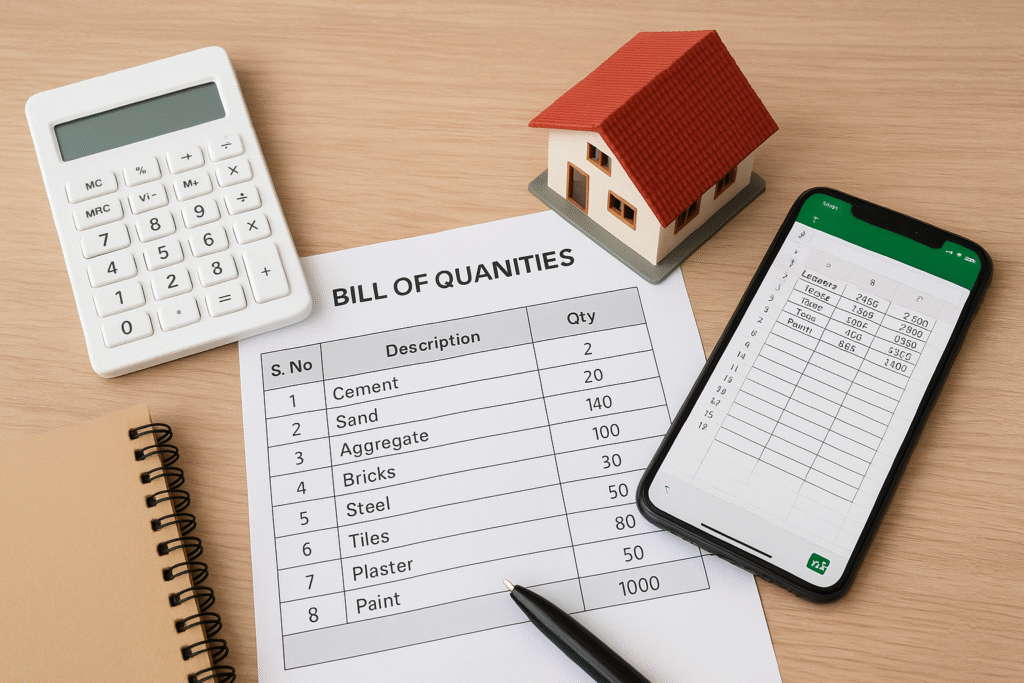
Always create a Bill of Quantities (BOQ) or a simple Excel sheet with item-wise costing before starting.
Include a 10–15% buffer for price fluctuations. And never begin work until you know your estimated cost per square foot.
Construction is not just about spending money — it’s about controlling how and where you spend it.
2. Changing the Plan After Construction Begins
This is one of the most expensive mistakes in the entire process.
Many homeowners finalize the plan, get the foundation built, and then suddenly want a bigger kitchen, or an extra balcony, or to shift the bathroom wall.
Every small design change after the structure begins means rework — breaking walls, changing pipes, and altering slab openings.
That means double labour, material wastage, and delays.
Plan once. Finalize completely. Then execute with discipline.
Good planning saves not just money, but peace of mind.
3. Over-Designing the Structure
There’s a misconception that “stronger means thicker.”
Some people tell their contractor, “Make the slab thicker; I want a strong house.” But true strength comes from good design, not extra concrete.
Oversized columns and beams mean unnecessary cement, steel, and cost.
A well-qualified structural engineer can design a building that’s both safe and economical.
Remember: a smart structure is not the one that uses the most material — it’s the one that uses it efficiently.
4. Rushing Into Interiors Too Early
Once the structure is ready, people get excited about interiors — false ceilings, fancy tiles, wardrobes, and lighting.
But the mistake is doing interiors before finishing electrical, plumbing, or waterproofing work.
If you close your ceiling and later find a leakage or a wiring issue, you’ll have to break it again — doubling your cost.
Do the technical groundwork first:
- Plumbing and electrical fittings
- Waterproofing and drainage checks
- Wall surface curing
Only then move to painting and interiors.
If you haven’t already, read our guide on Waterproofing Mistakes That Can Cost You Lakhs Later — it explains how skipping small waterproofing steps during construction becomes one of the costliest errors later.
5. Overspending on Materials You Don’t Need
We all want premium-looking finishes — Italian marble, imported tiles, designer lights.
But most of these decisions are influenced by trends, not practicality.
For example, marble flooring in wet areas might look luxurious but is slippery and high-maintenance.
Imported fittings look stylish, but locally made ISI-certified brands often perform just as well — at half the cost.
Similarly, many homeowners ignore cost-effective innovations like Interlocking Bricks Technology, which can reduce wall cost, save plastering expenses, and provide natural insulation.
Smart choices don’t reduce beauty — they reduce waste.
6. Ignoring Waterproofing and Plumbing Quality
In construction, the biggest regrets come from what you can’t see — waterproofing, pipes, and drainage lines.
These are the systems that make or break your building’s long-term health.
Many people try to save a few thousand rupees here, choosing cheaper chemicals or unbranded pipes. But when leakage starts, repairs cost lakhs — and even then, damage is rarely 100% reversible.
Use trusted brands, follow the curing time properly, and inspect work at every stage.
Saving money today on invisible areas will cost you much more later.
7. Poor Site Supervision
Even if your materials are good, poor workmanship can waste everything.
When supervision is weak, mistakes go unnoticed — wrong mix ratios, poor curing, or improper leveling.
A good site supervisor or project manager is not an expense; it’s a protection for your investment.
They ensure work happens according to the drawing, materials are used efficiently, and labour productivity remains high.
If you can’t be on site daily, at least visit twice a week and document progress with photos.
Your presence itself keeps quality in check.
8. Unplanned Electrical and Plumbing Layouts
This is a silent budget killer.
When civil work is done before planning electrical or plumbing layouts, rework is inevitable.
Walls get cut open again, tiles are broken, and labour hours double.
Before plastering, finalize:
- Switchboard locations
- Plumbing line directions
- Drainage points
- Water tank and motor placements
Coordination between the architect, civil engineer, and electrician at this stage can save both time and money.
9. No Record of Small Expenses
During construction, not every expense feels big.
A few extra cement bags, some pipes, nails, or buckets of paint — small items that nobody tracks.
But by the end, these “invisible” purchases add up to tens of thousands.
Keep a daily or weekly expense log.
You can use a notebook or a simple Google Sheet to track purchases.
Transparency is the first step toward cost control.
10. Paying Without Measuring or Checking Work
One of the most overlooked areas of overspending is payment without verification.
Contractors often bill for full quantities — but sometimes actual usage is lower.
For example, if 8 cubic meters of concrete were billed but only 6 were poured, you’ve paid extra unknowingly.
Always cross-check quantities, measure finished areas, and verify the work before clearing payments.
It’s not about mistrust — it’s about accountability.
Final Takeaway
Most people think overspending happens because they choose expensive materials or luxurious designs.
In reality, it happens because of unplanned decisions, poor coordination, and a lack of supervision.
Building a home is not just a construction project — it’s a financial journey.
Every decision, every delay, every small oversight affects your total cost.
Plan patiently, finalize designs completely, and focus on quality where it truly matters — structure, waterproofing, and plumbing.
Everything else can be upgraded later.
A home built with planning stays strong, beautiful, and stress-free for decades.
Because a happy home isn’t built with more money — it’s built with clarity, control, and care.