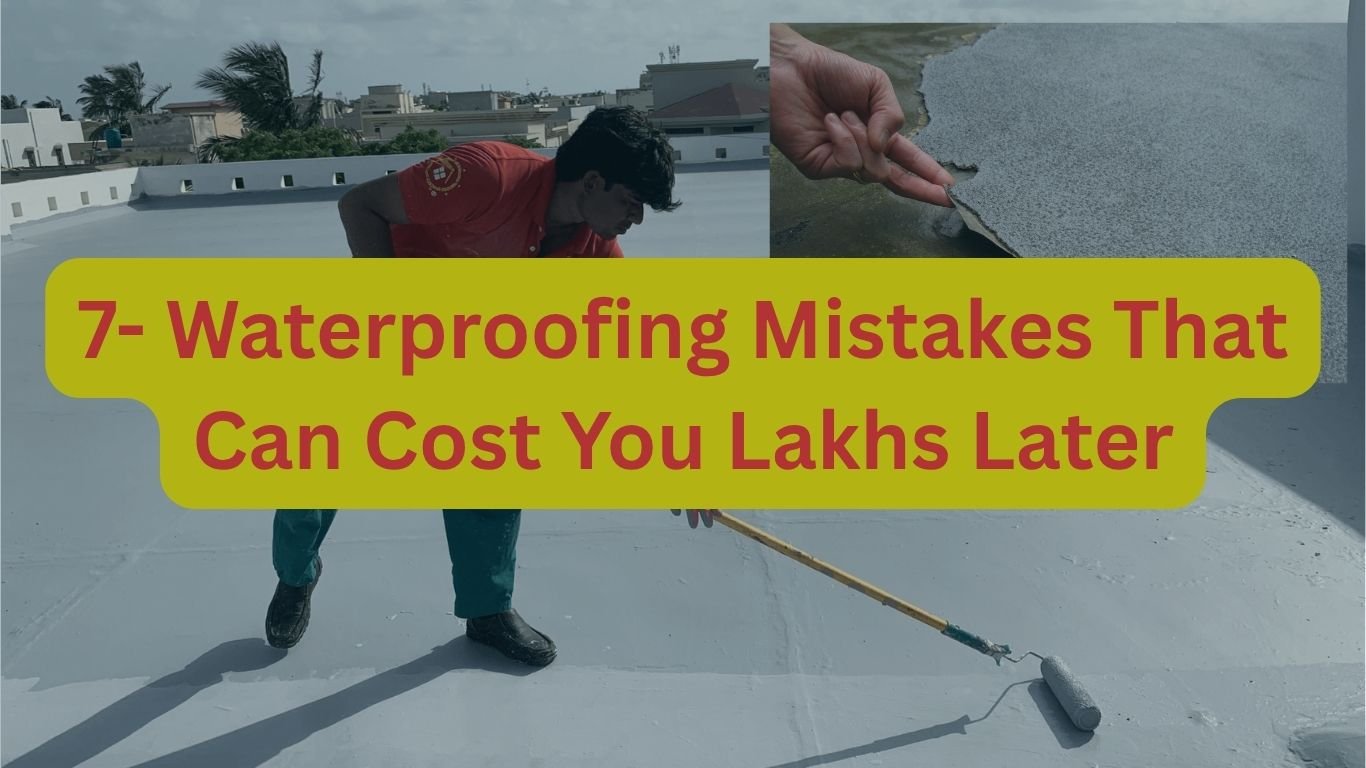
It usually starts small.
A tiny damp patch near the ceiling. A faint smell of wet concrete after rain. A dark patch growing behind your wardrobe.
You ignore it once, twice, maybe for a few months — until one day, your ceiling paint starts peeling, the wall turns black, and you realize your beautiful new home is slowly being eaten from the inside.
And that’s when the shock hits — repairing waterproofing mistakes costs more than doing it right the first time.
During my site visits as an interior designer and civil enthusiast, I’ve seen this story repeat dozens of times.
Homeowners spend lakhs on tiles, false ceilings, or modular kitchens, but skip proper waterproofing — assuming it’s a small technical thing.
But in construction, “small leaks sink big investments.”
So, let’s understand what really goes wrong — and how you can avoid these costly waterproofing mistakes before it’s too late.
1. Ignoring Waterproofing at the Foundation Level
The biggest mistake begins at the lowest point — the foundation.
Many builders skip waterproofing below the plinth, thinking “it’s underground, so rain won’t reach it.”
But moisture from the soil seeps upward through a process called capillary action, slowly spreading through the wall.
You might not notice it for months, but it silently weakens the plaster, makes paint peel, and even causes efflorescence — those white salty marks on walls.
Always apply a bitumen coating or a waterproof membrane over the foundation and plinth beam before brickwork starts.
It acts as a permanent barrier that stops water from ever touching your wall base.
2. Poor Terrace or Roof Waterproofing
The terrace is the most vulnerable part of your house.
It faces sun, rain, dust, and temperature changes every single day. A single crack or uneven surface can let water seep into the slab, eventually showing up as leakage on your ceiling.
Common terrace mistakes include:
- Using poor-quality waterproofing chemicals
- Not curing the coating properly (especially in summer)
- Ignoring slope direction — water stagnates instead of flowing to drains
Use a cementitious or elastomeric waterproof coating, apply at least two coats, and ensure proper curing.
Always check that your terrace has a minimum slope of 1:100, directing water toward the outlets.
If you’re interested in exploring eco-friendly and cost-effective alternatives for outer walls, check our related post on Interlocking Bricks Technology — another great way to make construction durable and sustainable.
3. Bad Bathroom and Toilet Waterproofing
Bathrooms are the most common source of leakage complaints — especially in multi-storey buildings.
If the joints, corners, or pipe openings aren’t properly sealed, water seeps below the tiles and slowly damages the concrete slab underneath.
The result? The ceiling of the room below starts leaking, and you end up spending lakhs to fix someone else’s bathroom.
The golden rule: waterproof before tiling.
Apply a flexible brushable membrane or liquid waterproof coating on the entire floor and walls up to at least 1 foot above floor level.
Seal the gaps around floor traps, pipes, and corners using a polyurethane or cement-based sealant before tiles go in.
4. Neglecting the Balcony and External Wall Junctions
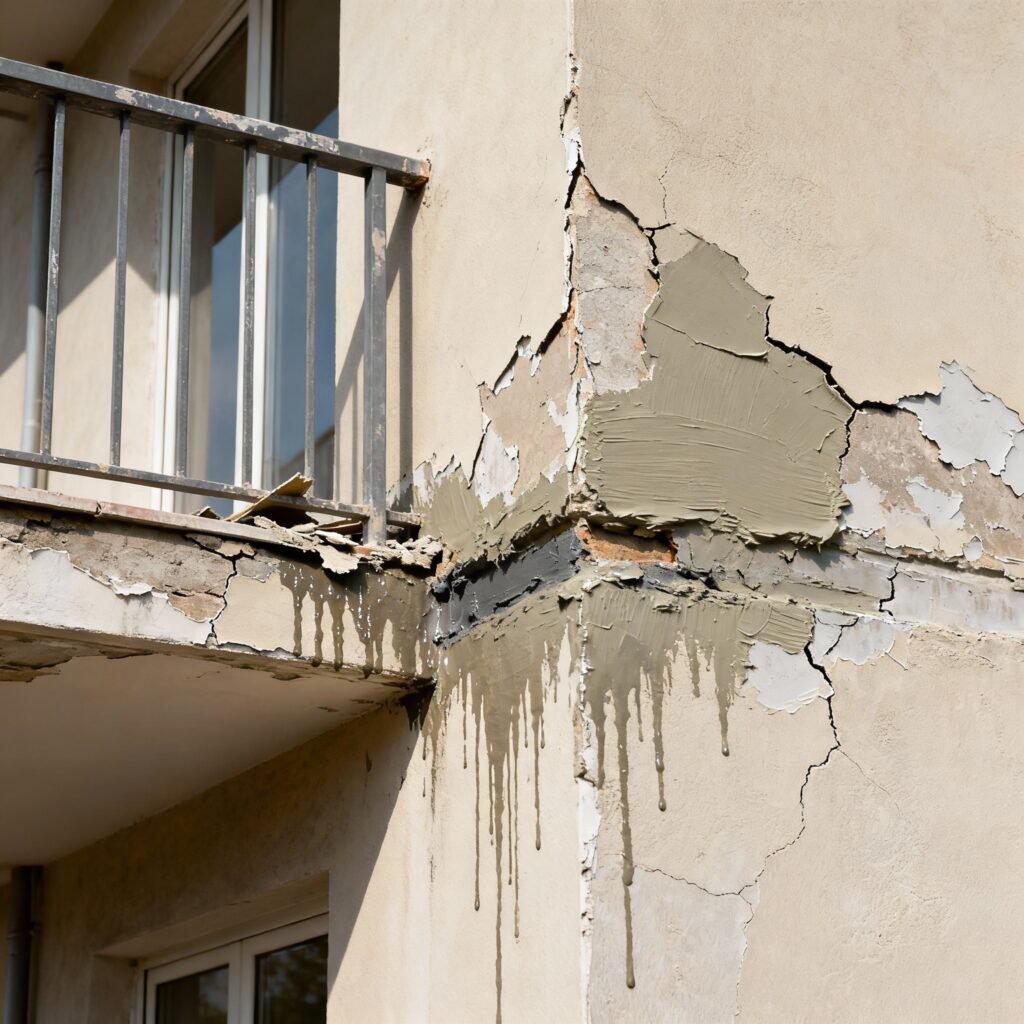
Balconies are small but often cause big trouble.
During heavy rain, water accumulates at wall joints where floor tiles meet the parapet wall. Without proper waterproofing, it seeps inside — damaging paint and plaster in adjacent rooms.
Another mistake is skipping junction waterproofing between the roof slab and the external wall.
That small gap, if untreated, acts like a slow leak path for rainwater.
Apply a waterproof layer below balcony tiles and use flexible joint sealants on all tile corners.
On external walls, use a cementitious waterproof coat before applying plaster or paint.
5. Relying Only on Paint or Chemical Coatings
One of the biggest misconceptions is:
“If I apply waterproof paint, that’s enough.”
It’s not.
Paints are surface protectors, not moisture stoppers. They prevent minor dampness but can’t block seepage coming from behind the wall.
The correct approach is two-layer waterproofing —
- Integral waterproofing: Add waterproof admixtures into concrete and mortar during construction.
- Surface waterproofing: Apply coatings or membranes after curing.
This combo ensures protection both inside and outside the structure.
6. Poor Slope and Drainage Planning
Even the best waterproofing fails if water doesn’t leave the surface.
Flat terraces or bathrooms with wrong slope directions collect stagnant water, which eventually finds its way into cracks.
Always maintain a slope of 1:100 toward drain points.
Ensure balcony and terrace drains are cleaned regularly — because a clogged outlet can ruin a lakh-worth of waterproofing job in a single monsoon.
7. Skipping Site Inspections and Quality Checks
Here’s a truth that many people learn too late:
Most waterproofing fails not because of materials — but because of poor supervision.
Workers sometimes dilute chemicals or skip layers to save time. Once the tiles are laid, these errors remain hidden — until leakage appears months later.
Always inspect key waterproofing stages:
- Before plastering (foundation waterproofing)
- Before tiling (bathroom and terrace waterproofing)
- After finishing (drain testing and water flow check)
Spending 30 minutes in inspection can save ₹2–3 lakh in repairs down the line.
8. Ignoring Expansion Joints and Cracks
Many modern buildings have expansion joints — tiny spaces that allow the structure to expand or contract with temperature changes.
If these joints aren’t sealed properly, they become water entry points.
Similarly, micro cracks in plaster or concrete might look harmless but can let water seep in and cause hidden dampness.
Seal expansion joints using polyurethane-based sealants and apply crack fillers before painting.
9. Using Untrained Labour for Waterproofing
Waterproofing looks simple but requires technical understanding — right mixture ratio, curing time, and layer thickness.
Unfortunately, many contractors use unskilled labourers who have no training in handling waterproofing chemicals.
Always ensure the applicator is certified by the waterproofing brand (like Dr. Fixit, Asian Paints Smartcare, or Fosroc).
A small extra cost in skilled labour prevents years of recurring leakage issues.
Final Takeaway
Waterproofing isn’t a finishing job — it’s part of your home’s structural protection.
Once water finds a path inside, it’s nearly impossible to stop it completely.
So whether you’re constructing a new home or renovating an old one, make sure to treat waterproofing as seriously as you treat your flooring or structure.
It’s simple:
A well-painted wall may please your eyes, but a well-waterproofed wall protects your peace.
Spend wisely once — and save lakhs later.




One thought on “Waterproofing Mistakes That Can Cost You Lakhs Later: The Most Common Ones Every Homeowner Should Know”