
A few years ago, during a renovation project in Hyderabad, a client called me in December with an unusual complaint.
Their wooden doors, which looked perfect just months ago, had started swelling. Some didn’t close properly anymore. The polished furniture had lost its shine, and the wardrobe doors made creaking sounds when opened.
They thought it was a problem with the carpenter’s work. But it wasn’t. It was winter moisture quietly doing its damage — something most homeowners overlook until it’s too late.
That’s when I realized how little people understand about what humidity does to wood.
Why Winter Moisture Becomes a Problem
Many people think summer is harsh on furniture — the heat, dust, and direct sunlight. But winter comes with its own set of challenges, especially in regions where temperatures drop at night and humidity levels rise.
During winter, moist air condenses on colder surfaces — and wood, being porous, absorbs that moisture like a sponge.
Even small changes in humidity make wood expand or contract.
The result? Doors that jam, drawers that stick, and furniture joints that loosen over time.
The science behind this is simple — wood fibers expand when they absorb moisture and shrink when they dry out. Unlike metal or plastic, wood never stays still. It constantly breathes with the air around it.
And when that cycle repeats without protection, the structure and finish of your furniture slowly deteriorate.
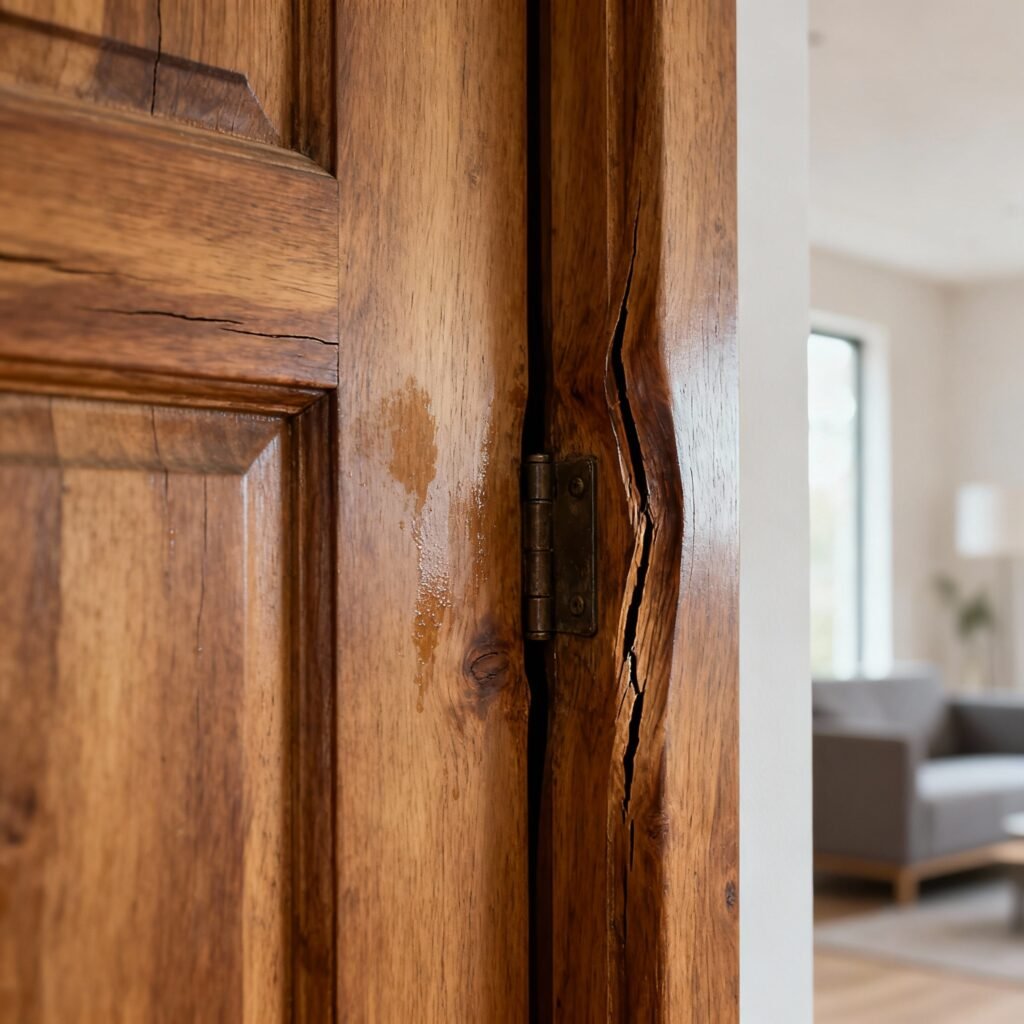
Common Signs of Moisture Damage in Wooden Furniture
You don’t need to be an expert to spot early signs.
If you notice any of these during winter, your wood is already absorbing excess moisture:
- Doors or windows become tight — especially during mornings.
- Drawers stick or don’t slide smoothly.
- Furniture surfaces lose shine or feel slightly rough to touch.
- Small cracks appear at joints or along the grain.
- Musty smell in wardrobes or wooden cabinets.
Once these signs show up, the moisture has already affected the wood’s surface and joints. But if you act early, it’s easy to prevent permanent damage.
How to Protect Wooden Doors and Furniture
There’s no single fix — it’s about combining small preventive habits that protect your furniture naturally.
1. Keep Interiors Well-Ventilated
Winter mornings often make people shut doors and windows tightly. But that traps humid air inside, especially after bathing or cooking.
Try to keep rooms ventilated during the late mornings when sunlight is warm. Even 15 minutes of fresh air helps reduce indoor humidity.
2. Use a Dehumidifier or Natural Moisture Absorbers
If your home is prone to dampness, a dehumidifier is worth it.
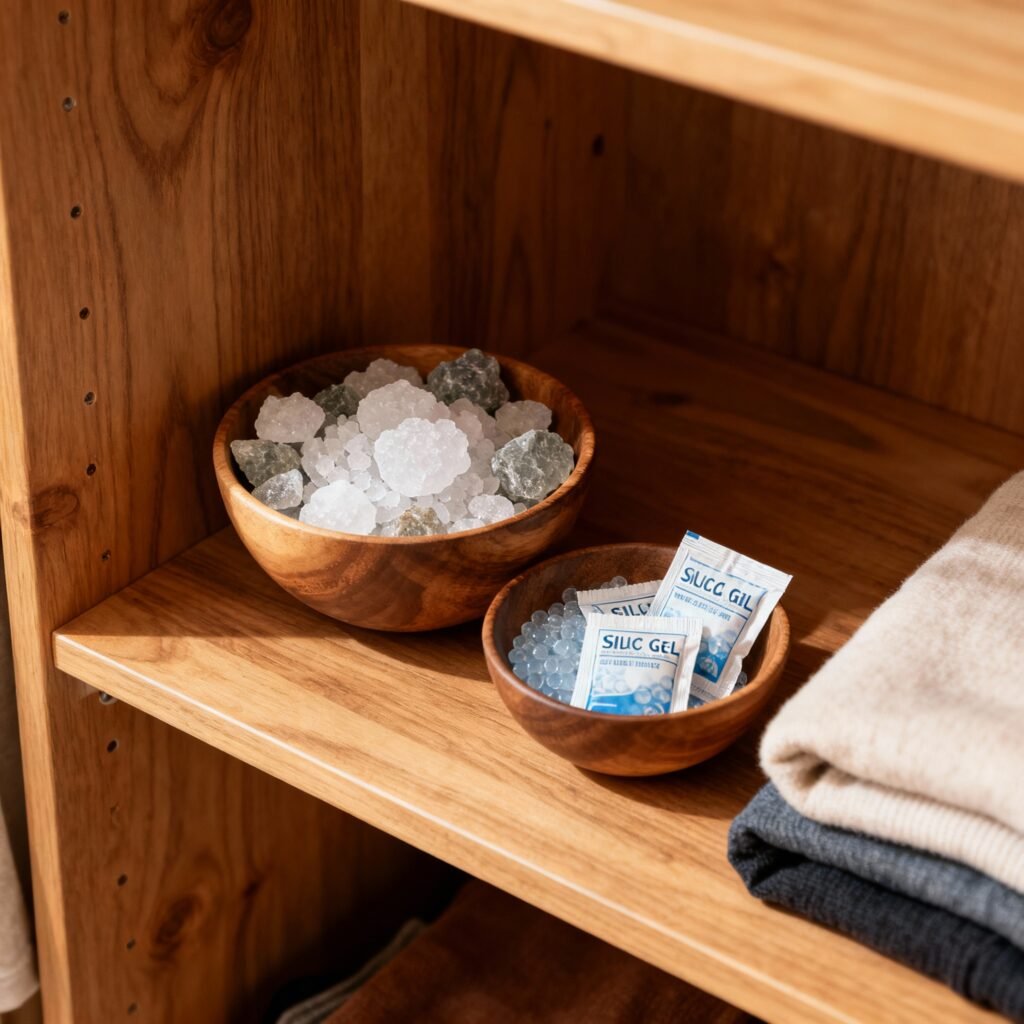
For a simpler, low-cost option, keep bowls of rock salt, silica gel, or baking soda inside wardrobes and storage units.
They naturally absorb moisture and prevent the musty odor that comes with damp air.
3. Re-polish or Apply a Sealant Layer Before Winter
A thin layer of lacquer, varnish, or wood sealer adds a protective film that keeps moisture from entering the surface.
If your furniture hasn’t been polished for a few years, early winter is the best time to get it done.
Don’t use low-cost polishes — they look good initially but peel quickly. Choose PU polish or melamine for better resistance.
4. Maintain Moderate Indoor Temperature
Rapid temperature changes make wood expand and contract more frequently.
Avoid placing furniture directly next to heaters or open windows. Maintain a stable temperature around 20–25°C indoors if possible.
5. Lift Furniture Slightly Above Floor Level
Wooden legs that directly touch cold floors absorb ground moisture.
Using small rubber or plastic pads under furniture legs prevents this. It’s especially helpful in areas with damp floors or unventilated corners.
6. Avoid Covering Furniture with Plastic Sheets
Many people cover furniture with plastic to “protect” it during winter, but that traps moisture underneath.
If you need to cover something, use cotton or breathable fabric sheets instead.
7. Check Door and Window Frames
If your main door or window frames are wooden, inspect the corners. Cracks or gaps can allow moisture and cold air in, worsening the swelling problem.
Seal them with a good-quality weather strip or silicone sealant before the winter season starts.
The Hidden Impact on Interiors
Moisture doesn’t just affect the wood’s surface — it can silently damage finishes, hardware, and even nearby walls.
For example, when a wooden door swells, it rubs against its frame, scraping away polish and exposing bare wood. That raw surface then absorbs more moisture, accelerating the cycle.
Similarly, wardrobes placed against exterior walls absorb dampness from the wall itself. That’s why you’ll often see the back panel of wardrobes warping or developing mold spots.
In such cases, shifting furniture slightly away from the wall (even by 1 inch) improves air circulation and prevents direct moisture transfer.
How Professionals Handle It
In professional projects, we often apply a seasonal polish cycle — one light coat every year or two — just before winter.
We also design furniture with small expansion gaps, allowing wood to expand naturally without warping.
Another tip we follow on-site is to check moisture content in plywood before using it.
Ideally, it should be between 6–8%. Anything higher means the wood wasn’t dried properly, and it will react more to seasonal humidity.
So when you buy furniture, especially custom-made ones, don’t hesitate to ask your carpenter or vendor if the wood was “seasoned.” Properly seasoned wood lasts decades.
For Homeowners: A Simple Checklist
Before winter sets in, take a quick look around your house and note:
- Are doors closing smoothly?
- Is the polish still glossy or turning dull?
- Are there any cracks near the joints?
- Do cupboards or wardrobes smell musty?
Addressing these early saves both money and maintenance later.
If you’re planning renovation or new interiors, choose a professional who understands the climate and uses properly treated materials — not just what’s trendy or cheap.
Why It’s Worth the Effort
People often underestimate the cost of moisture damage. Re-polishing furniture, repairing swollen doors, or replacing panels can easily cost several thousands of rupees.
But the bigger loss is in the appearance — dull finishes, warped surfaces, and that persistent damp smell take away the freshness of your home.
Wood is a living material. If you treat it right, it stays elegant for decades. But if you ignore it, even premium teak can lose its beauty in one season.
Taking small preventive steps now means you’ll enjoy your furniture longer — no squeaky doors, no swollen wardrobes, no dull finishes.
Final Thought
Winter brings comfort — warm sunlight, cozy rooms, hot tea — but it also brings hidden humidity that quietly affects your interiors.
Protecting wooden furniture and doors isn’t complicated; it’s just about being aware of what your home needs before the problem starts.
A few minutes of care before the season begins can save years of maintenance later.
Because beautiful homes aren’t built once — they’re preserved every season, one smart habit at a time.




One thought on “Protect Wooden Furniture and Doors from Winter Moisture”