The Hidden Design Element That Protects Every Home
When people start building their dream home, they often picture everything inside — a stylish modular kitchen, glossy tiles, elegant false ceiling lights, and maybe even a small home theatre.
But outside the walls, there’s something quietly shaping the comfort, safety, and lifespan of that home — the open space around it.
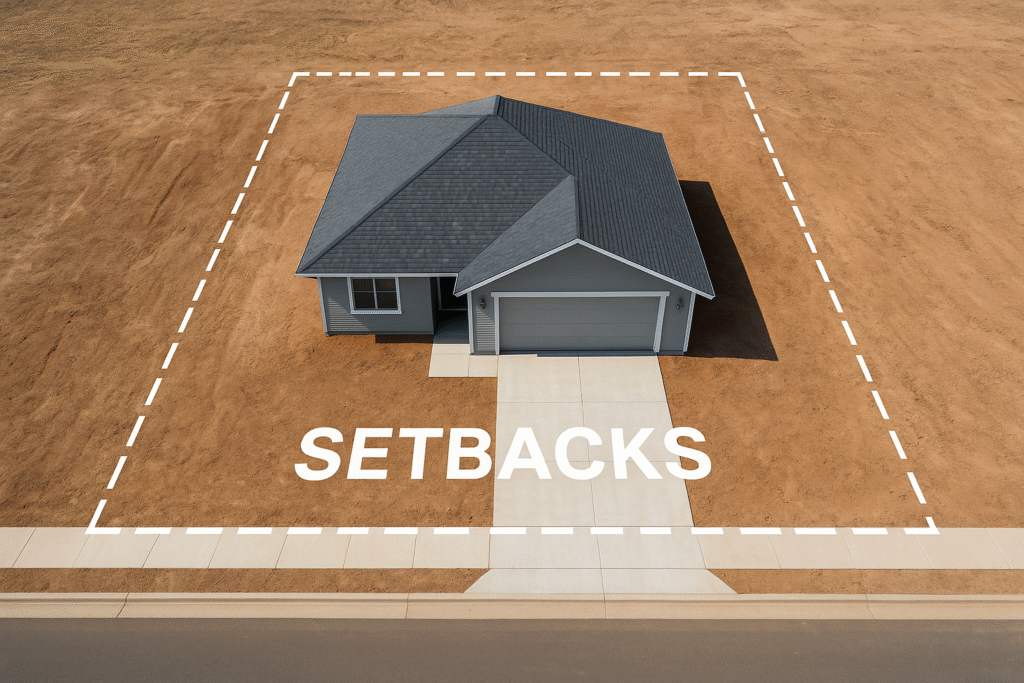
We often call it the setback area — the breathing zone between your building and the boundary wall.
It’s invisible in glamour shots, but it’s what keeps your home alive.
Let me tell you a true story from my own experience.
A Real Site Story — When “More Built-Up” Went Wrong
It was in Sircilla, a small town in Telangana, where I was assisting a client named Ramesh — a government employee planning to build a 2BHK house on his 200 sq. yd plot.
He wanted a simple home, but with one condition:
“I don’t want to waste any space outside. Build till the compound wall. Every foot counts!”
At that moment, like most homeowners, he saw open space as unused land.
Despite my suggestion to leave a small setback, he insisted on maximizing the built-up area. We went ahead — one foot gap on one side, zero on the other. The house looked massive on paper and even grand after finishing.
But within a year, the problems began —
- The living room walls stayed damp during monsoon.
- Sunlight barely reached the kitchen.
- No airflow meant constant stuffiness inside.
- The plumber couldn’t even reach the drain line running along the wall.
The irony? The so-called “extra space inside” brought extra problems outside.
That’s when Ramesh understood that open space is not wasted area — it’s your home’s insurance policy.
Why Open Space Around Your House Is So Important
When we think of building design, we imagine columns, beams, and slabs.
But good civil design is not just about what you build — it’s also about what you don’t build.
Let’s break down why this open area matters so much.
1. For Ventilation — Let the House Breathe
Open space allows free airflow around the structure.
When air circulates, heat escapes, humidity reduces, and your rooms remain naturally cool.
In dense urban areas, where homes are built wall-to-wall, poor ventilation often leads to dampness, mold, and poor air quality.
2. For Natural Light — The Healthiest Energy Source
Sunlight entering from windows not only brightens spaces but also kills germs and prevents moisture buildup.
Leaving sufficient open space on the east and south sides ensures proper daylight entry throughout the year.
3. For Drainage and Maintenance
The open area provides access for pipelines, drainage, and wiring. During repairs or maintenance, workers can easily move around without breaking walls or damaging flooring.
4. For Structural Safety
When a building is constructed too close to the boundary wall, there’s no room for air movement — the foundation retains moisture longer, which affects structural durability over time.
5. For Fire Safety and Municipal Approval
Most municipal corporations (like GHMC, HMDA, BDA, etc.) mandate setback spaces for safety and accessibility.
These spaces allow emergency vehicles or fire personnel to move around the building if required.
How Much Open Space Should You Leave? (Setback Rules in India)
Every city has its own building bylaws, but here’s a general guideline used by most local bodies:
| Plot Size | Front Setback | Rear Setback | Side Setbacks |
|---|---|---|---|
| Up to 100 sq. m | 1.5 m | 1.0 m | 0.9 m each |
| 101–200 sq. m | 3.0 m | 2.0 m | 1.5 m each |
| 201–500 sq. m | 3.0–5.0 m | 3.0 m | 2.0–3.0 m |
| Above 500 sq. m | 4.0–6.0 m (all sides) | As per city master plan | — |
Note: These numbers can vary by state. Always confirm with your local municipal authority or architect before construction approval.
Practical Example — The 30×40 Plot Dilemma
A 30×40 ft (1200 sq. ft) plot is quite common in urban India.
If you build a G+1 structure and follow setback rules — say 3 ft on sides and 4 ft in front — your built-up area reduces slightly.
But in return, you get:
- Better light and airflow
- Less wall dampness
- Space for plumbing and electrical maintenance
- A cleaner elevation view
In short: you trade 100 sq. ft of land for 1000 sq. ft of comfort.
Smart Design Ideas to Use Your Open Space
Instead of leaving open areas unused, here’s how you can make them part of your lifestyle:
- Create a Green Buffer — Grow small plants or a vertical garden along walls. It enhances cooling and aesthetics.
- Design a Side Walkway — Paved paths not only look neat but also help during maintenance work.
- Install Rainwater Channels — Convert open space into a recharge zone using permeable tiles or soak pits.
- Utility Zone — Plan outdoor wash areas, gas cylinders, or RO water units in the rear setback.
- Courtyard Concept — If possible, use part of the open area as an internal courtyard for better air and light flow.
This way, your setback doesn’t remain empty — it becomes an active breathing zone for your home.
Common Mistakes People Make
- Building walls right on the compound line without approval.
- Ignoring city setback rules and later facing demolition notices.
- Placing septic tanks or sumps in side setbacks without proper waterproofing.
- Overhanging balconies that violate open-space ratios.
Avoiding these mistakes early saves huge costs and legal trouble later.
Final Takeaway
When you look at an architectural drawing, remember:
The blank spaces around your house are just as important as the built ones inside.
Open space is not about wasting land — it’s about ensuring light, air, safety, and long-term durability.
It’s what separates a house that just stands from a home that breathes.
So, before finalizing your floor plan, pause and ask your architect:
“Have we left enough space for my home to breathe?”