A few months ago, a homeowner from Hyderabad called me with a common question:
“Sir, I bought a plot and I’m planning a G+3 house. That should be fine, right?”
My first response was simple:
“Did you do a soil test for building construction on your plot?”
He said no.
This is where most home construction issues begin — not with cement, not with columns, but with the soil below your feet.
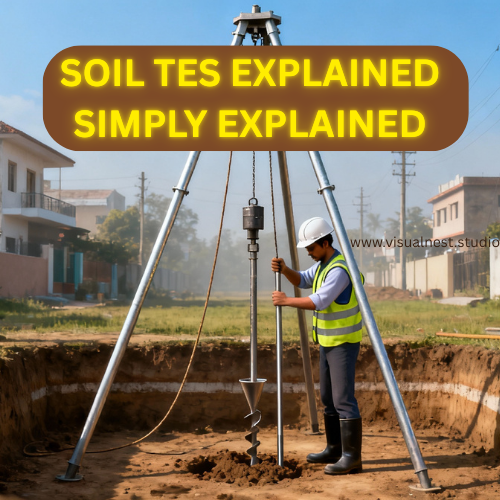
A proper soil test for building construction is the only scientific way to know how many floors your land can safely handle.
Why Soil Test for Building Construction Matters More Than You Think
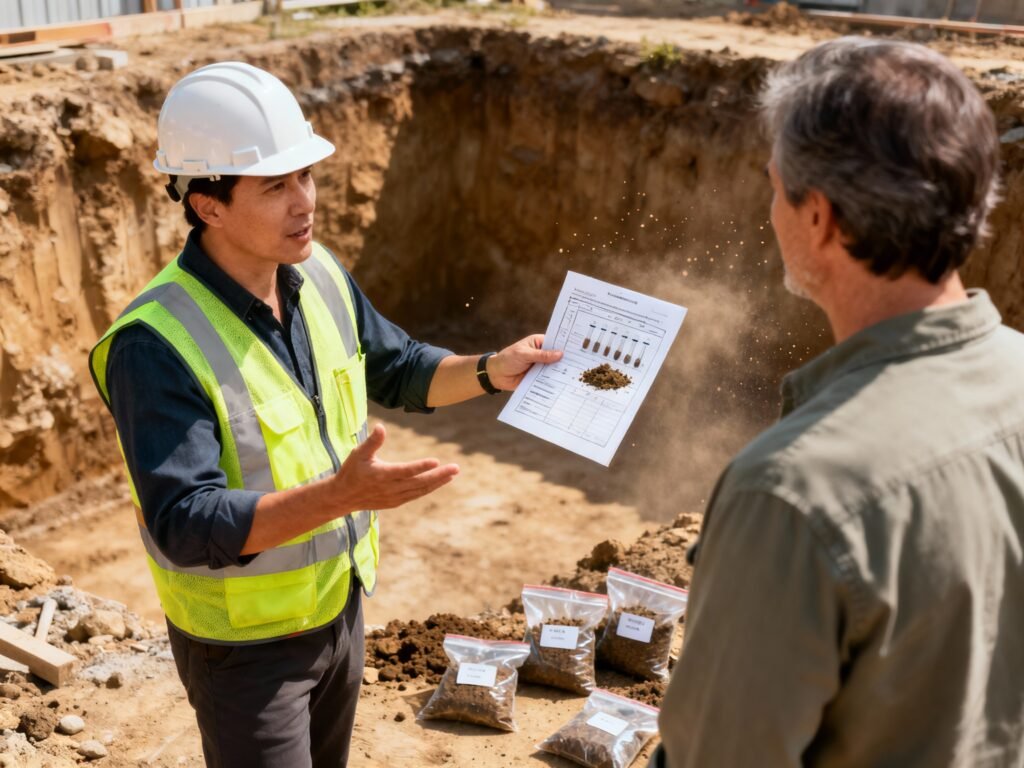
Every plot looks strong from the outside. You can walk, jump, or even drive a car on it — but that doesn’t tell you how much load the soil can carry over decades.
A soil test for building construction reveals the real truth hidden below the surface.
It tells you:
- How much load your soil can take
- How deep should your foundation be
- Whether your soil can support G+1, G+2, or more
- How your building might behave seasonally
Without this test, you’re building blind.
What Soil Test for Building Construction Actually Checks
A soil test isn’t guesswork — it’s a scientific study of the soil layers beneath your plot.
It examines:
- Soil bearing capacity
- Moisture content
- Soil type
- Water table level
- Settlement behaviour
- Load resistance
These factors completely decide how many floors your plot can support.
While planning your floors, also check your Construction Cost Calculator here:
How Many Floors Can Your Land Handle?
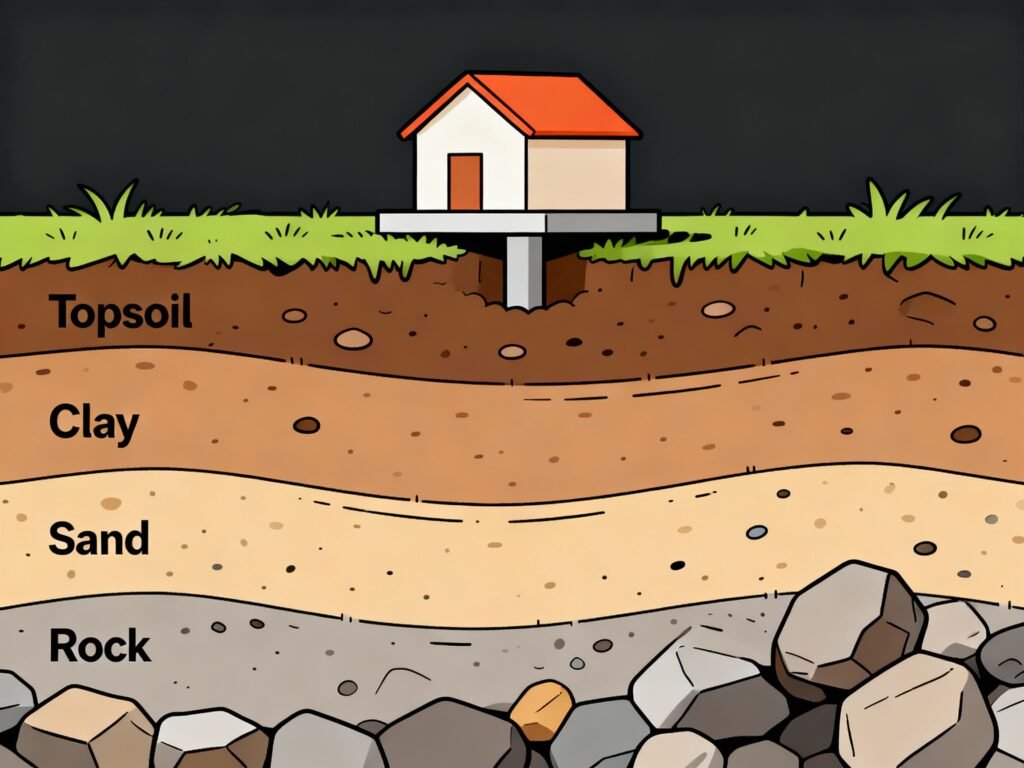
Here’s the general idea (but final decision must be based on a soil test for building construction):
1. Hard Rock / Laterite Soil
Strong soil → Can support G+4 and above.
Foundation: Isolated footing.
2. Red Soil
Good strength → Usually supports G+2 or G+3.
Foundation: Combined or isolated footing.
3. Sandy Soil
Moderate strength → Good for G+1 to G+2.
Foundation: Raft or heavily compacted layers.
4. Clay Soil / Black Cotton Soil
Weak soil → Risky for multi-storey buildings.
Foundation: Under-reamed piles or raft.
Safe limit: G+1 only (usually).
Types of Soil Test for Building Construction
These are the tests used most commonly:
1. Standard Penetration Test (SPT)
Measures soil resistance. More resistance = stronger soil.
2. Plate Load Test
Used for small residential buildings to determine bearing capacity.
3. Moisture, Plasticity & Density Tests
Tell you how soil behaves during rains or winters.
4. Deep Core Sampling
Used for multi-storey buildings.
What Soil Test for Building Construction Reveals About Your Floors
Here’s a clear reference combined with soil bearing capacity:
| Soil Type | Approx SBC | Possible Floors |
|---|---|---|
| Rock / Gravel | 300–600 kN/m² | G+4 and above |
| Red Soil | 200–300 | G+3 |
| Sandy Soil | 150–200 | G+2 |
| Clay Soil | 100–150 | G+1 |
| Black Cotton Soil | 75–100 | G+1 only |
Again — these are estimates. Without a soil test, you shouldn’t assume anything.
When Should You Do a Soil Test for Building Construction?
- Before designing the foundation
- Before planning additional floors
- Before extending balconies
- Before constructing near slopes or water bodies
Skipping it can lead to structural cracks, settlement issues, and expensive repairs later.
Why Soil Test for Building Construction Is the Best Investment
A soil test costs ₹5,000 to ₹10,000 — not even 0.1% of your entire home budget.
But it prevents lakhs of rupees in damage and ensures your house stands strong for generations.
Building a home is not just about materials — it starts with what holds everything together: your soil.