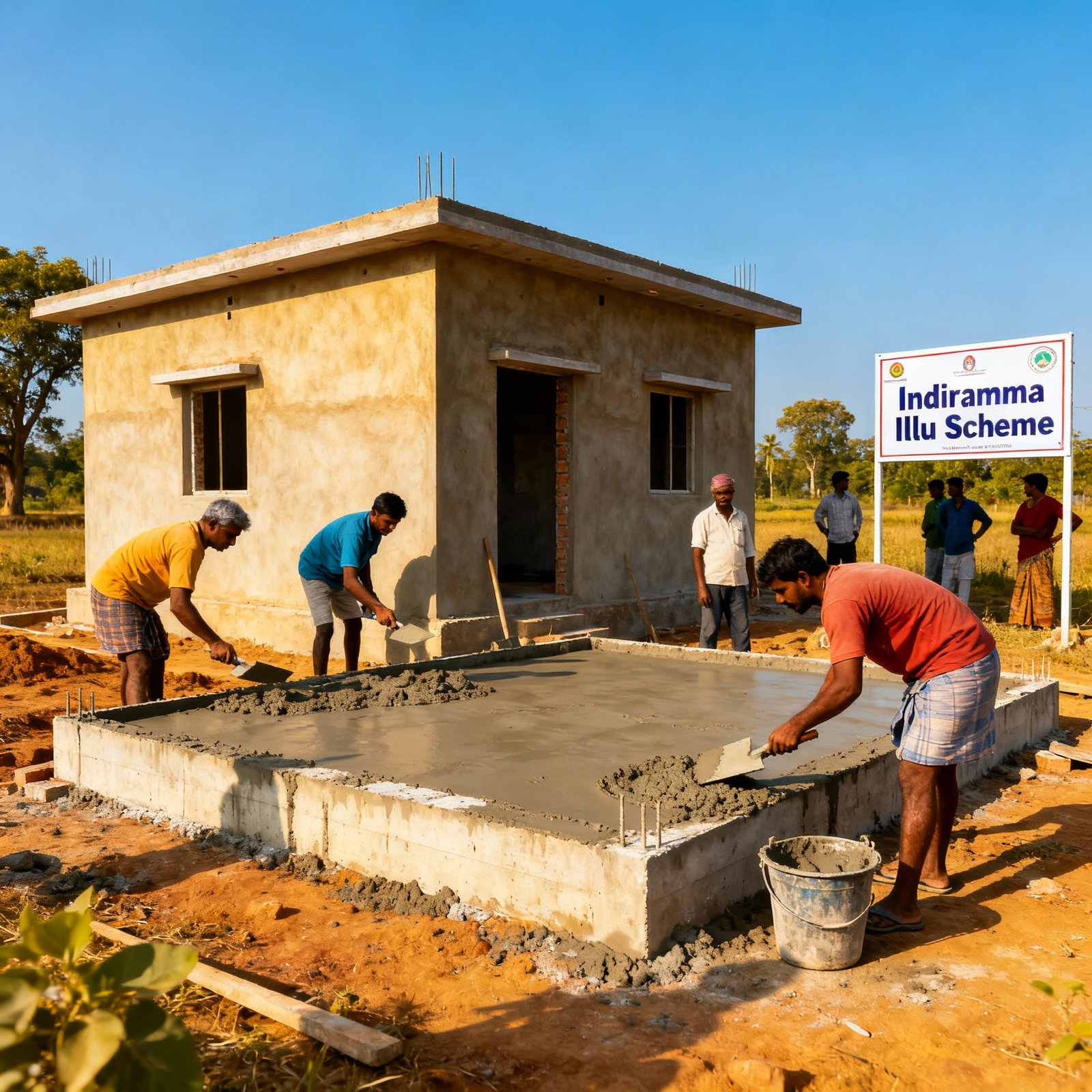
For most Indian families, building a house is not just a financial goal — it’s an emotional one. But with rising material costs and labour charges, constructing a home from scratch has become expensive.
That’s why government subsidies, especially in states like Telangana and Andhra Pradesh, play a crucial role in helping middle- and low-income families turn that dream into reality.
In 2025, both states announced strong housing programmes — Telangana with its Indiramma Illu Scheme, and Andhra Pradesh continuing support under Pradhan Mantri Awas Yojana (PMAY) and state-level assistance.
If you’re planning to build a house this year, understanding these schemes can save you lakhs in construction expenses.
Telangana’s Indiramma Illu Scheme 2025
Telangana’s flagship Indiramma Illu housing programme was reintroduced with a bold goal — to ensure every family in the state owns a permanent home.
Under this scheme, eligible beneficiaries receive financial assistance of up to ₹5 lakh to construct their houses.
What makes this year’s version different is its structure and transparency. The scheme now focuses on completing unfinished homes, supporting new beneficiaries, and promoting G+1 houses on smaller plots.
As a civil engineer who has seen projects on-site, I can say the 2025 Indiramma Illu is one of the most practical and people-friendly schemes Telangana has seen in years.
Who Can Apply for Indiramma Illu
To qualify for the Indiramma Illu subsidy:
- The applicant must be a resident of Telangana.
- The family must not already own a permanent house in their name.
- The household should fall under the economically weaker or lower-income groups.
- Land ownership or a valid title for the construction site is mandatory.
Applications are reviewed by local authorities, and funds are released in stage-wise instalments — from foundation to slab and finishing levels. This ensures that the financial support directly matches the progress of the house.
How the Subsidy Works
The Indiramma Illu subsidy isn’t a loan — it’s a direct financial grant. The state government provides funds through Direct Benefit Transfer (DBT) to the beneficiary’s account at every key stage of construction.
The payment typically happens in three or four stages:
- After the foundation work is completed.
- After the wall construction or the roof slab.
- After plastering and finishing.
This system ensures both accountability and progress. Local engineers or officials verify the work before approving the next release of funds.
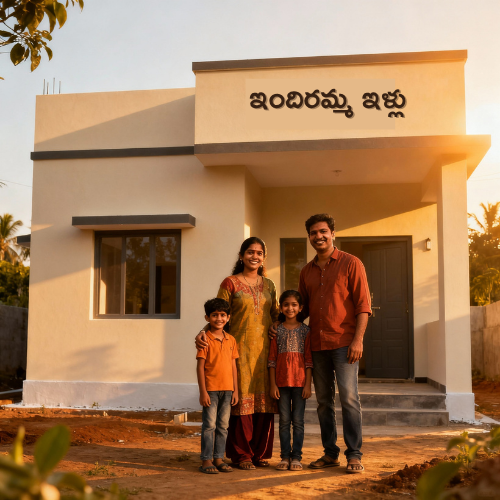
Why Indiramma Illu Matters
In Telangana, where urban land costs are rising and rural incomes fluctuate, Indiramma Illu brings stability to families who otherwise couldn’t afford home construction.
It not only promotes shelter security but also supports local construction labour, material suppliers, and small contractors — creating a ripple effect in the local economy.
Beyond economics, owning a home changes a family’s sense of belonging and pride.
I’ve seen firsthand how people treat their Indiramma Illu houses with care — finishing them beautifully, extending them as their income grows, and finally calling it “mana illu” with pride.
Indiramma Illu and the New G+1 Provision
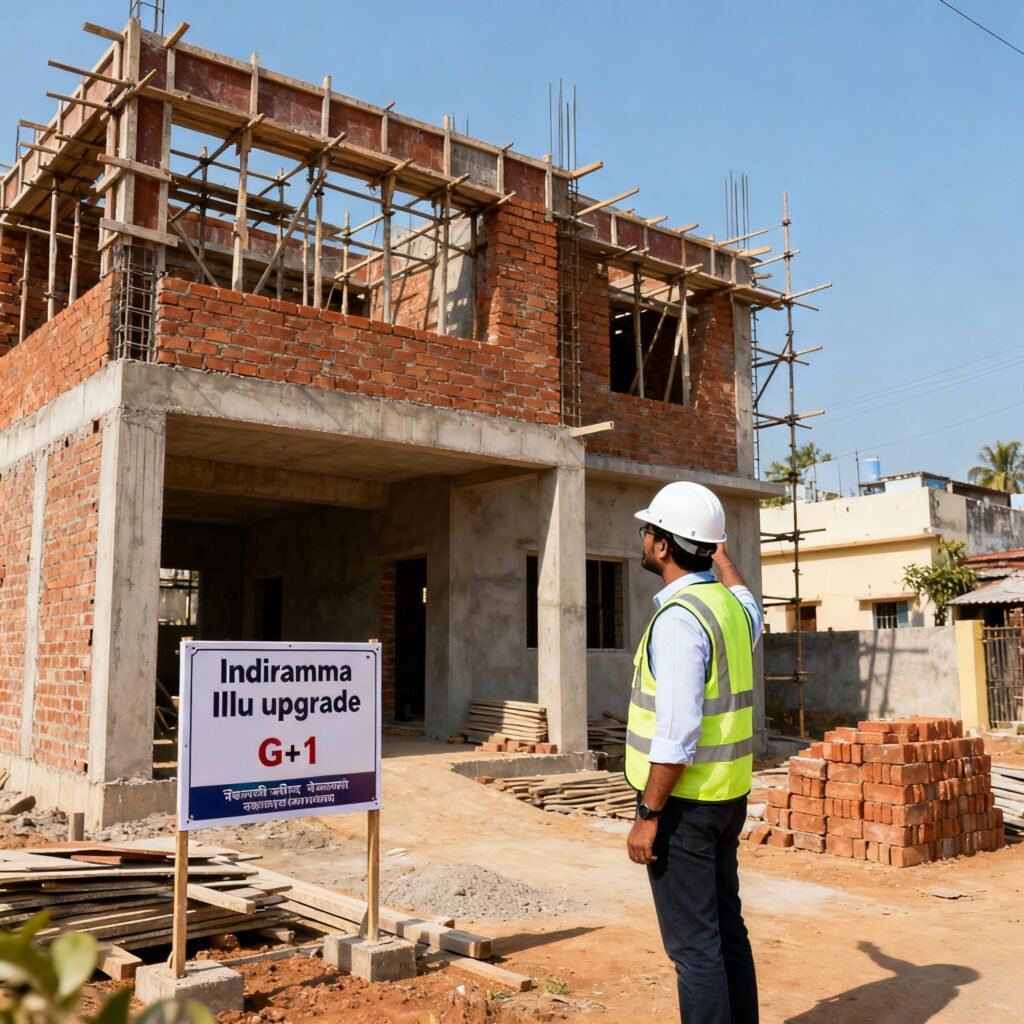
A major update in 2025 is the government’s approval for G+1 construction on smaller plots under the Indiramma Illu scheme.
This change helps families living on tight land parcels make better use of vertical space. Instead of crowding the ground area, they can now build an extra floor — ideal for joint families or future rental income.
From a structural perspective, G+1 requires proper foundation and load-bearing design. The scheme encourages homeowners to hire licensed engineers or masons to ensure the house meets basic safety standards.
This approach brings professional engineering into government-supported housing — something that was often missing in earlier programmes.
Andhra Pradesh: Continuing PMAY and State Assistance
Andhra Pradesh follows a similar approach through PMAY (Pradhan Mantri Awas Yojana) combined with state subsidies.
In 2025, beneficiaries receive around ₹2.5 to ₹3 lakh per unit, shared between the central and state governments.
The aim remains the same — to help families from lower and middle-income segments build permanent houses with basic amenities like electricity, sanitation, and drinking water.
While the amount is slightly lower than Telangana’s Indiramma Illu subsidy, Andhra Pradesh offers additional support in certain rural and coastal areas, especially where cyclone-prone conditions demand stronger housing.
The focus is shifting from simply sanctioning houses to ensuring on-time completion and occupancy — a major issue in earlier phases.
Common Steps Before You Apply
Whether you’re applying for Indiramma Illu in Telangana or PMAY in Andhra Pradesh, a few steps are essential to qualify:
- Ensure your land title documents are clear and updated.
- Confirm that you don’t own another house in your name.
- Provide income certificates and Aadhaar details for verification.
- Follow approved house designs or layouts, especially if applying for G+1 construction.
Remember, subsidy disbursement depends on construction progress — so plan your project timeline and budget accordingly.
Tips from a Civil Engineer’s Perspective
Over the years, I’ve guided several homeowners applying for government-supported housing.
Here’s what I’ve learned:
- Start with a clear estimate. Even if you receive ₹5 lakh under Indiramma Illu, know that you’ll need extra funds for finishes, flooring, and furniture.
- Avoid delays. The government releases funds based on milestones — delaying one stage can slow the next payment.
- Keep every receipt. Maintain bills for materials and labour; they might be needed for verification.
- Use proper materials. Don’t cut costs by using low-grade sand or cement. Subsidy doesn’t mean compromise — it means better planning.
- Document your progress. Take photos at every stage to maintain transparency and track your timeline.
Small steps like these ensure that your home construction remains smooth and fully compliant with the subsidy process.
Why 2025 is a Great Year to Build
With Indiramma Illu in Telangana and PMAY in Andhra Pradesh both active, 2025 offers one of the most favourable periods for affordable home construction.
The availability of government funding, faster digital verification, and modernized guidelines like G+1 permission make it easier than ever for families to start building confidently.
Moreover, both governments are prioritizing completion and quality control — ensuring houses are not only built but lived in safely.
Final Thought
A home is more than a structure — it’s security, comfort, and dignity.
Government subsidies like Indiramma Illu give people a head start, but the true value lies in how responsibly you plan and build.
If you’re eligible, 2025 is your year. Gather your documents, verify your plot, and begin your foundation with confidence.
Because with the right mix of government support and careful execution, even a modest house can become your family’s lifelong dream come true.