
I still remember a client from last year — he had just finished his dream home. Everything looked perfect. But by mid-December, the walls near the kitchen started showing faint damp patches. He thought it was minor, maybe condensation from cooking. Two weeks later, water began dripping through the false ceiling.
When we opened it up, it wasn’t the rain. It was a loose plumbing joint, hidden behind the wall. Cold weather had caused a small gap in the sealant, and the joint gave way. What could’ve been a ₹200 fix before winter turned into a ₹45,000 repair job — tiles, paint, false ceiling, everything redone.
That’s when I realized — people get excited about paint colors and furniture, but ignore the one thing that quietly keeps their home alive: plumbing.
The Problem Nobody Notices
Most plumbing systems are buried under tiles or walls, so we tend to forget them. Out of sight, out of mind. But winter is tough on these systems.
Pipes contract, seals stiffen, and any weak joint starts to leak slowly.
If you live in an area where mornings get chilly, the temperature difference between indoor and outdoor pipes causes condensation and micro-cracks. These aren’t visible at first — but water finds its way through the smallest space possible.
The result? Dampness, mold, and expensive repainting jobs by February.
Why It Gets Worse in Winter
Plumbing joints are designed to expand and contract slightly as temperatures change. But over time, the sealants (especially cheap ones) lose flexibility.
In summer, leaks dry fast — you might not even notice them.
In winter, humidity stays longer, sunlight is weaker, and everything that leaks stays damp for hours.
That’s how damage compounds silently. By the time you notice a patch, it’s already spread.
What Most People Miss
You don’t need fancy equipment to catch a leak before winter.
Most clues are visible if you look closely:
- White powdery stains near joints (that’s dried mineral from leaking water)
- Slight swelling in wood cabinets under sinks
- A faint “mushy” smell near walls after rain
- Tap handles or shower arms that feel slightly loose
These small signs are the plumbing system’s way of asking for attention.
The Easy Weekend Fix
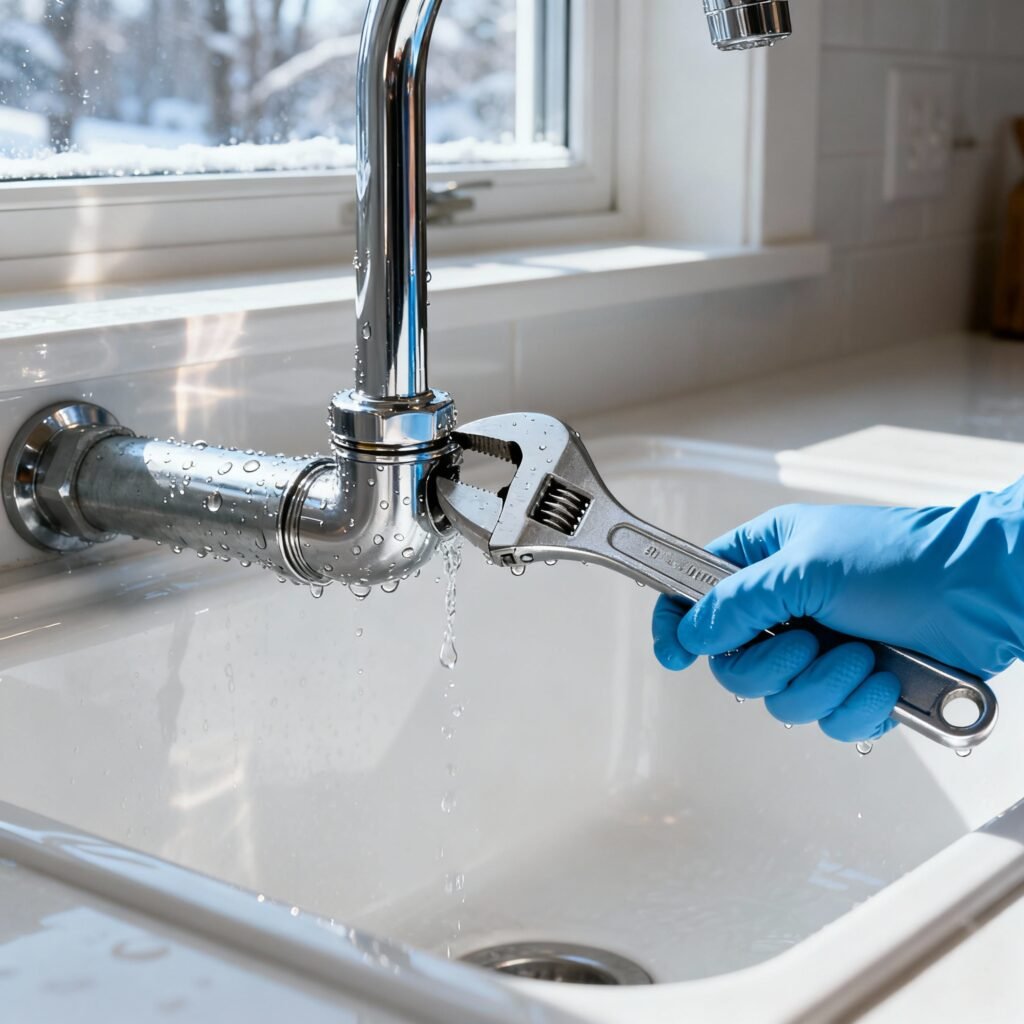
Checking plumbing joints doesn’t need to be a big project.
Take one weekend before the cold sets in and go around your home — kitchen, bathrooms, outdoor taps, terrace tanks.
Turn on taps and check for pressure drops or sound changes.
Run your hand along visible joints; even a slight dampness means the seal needs redoing.
If you find exposed pipes on terraces or balconies, insulate them with foam sleeves or wrap them with thick cloth. It’s basic, but it works.
And please — drain unused pipes, like garden hoses or outdoor sinks. Trapped water in winter expands when it cools, and that’s what bursts pipes.
The Hidden Cost of Ignoring It
Every year, homeowners spend thousands fixing leakage-related damage that could’ve been avoided with a simple pre-winter check.
Once water enters a wall, it doesn’t just damage the surface — it weakens plaster, corrodes metal, and invites fungus.
It’s not a leak anymore; it’s a chain reaction.
That’s why professional maintenance teams always do a seasonal plumbing inspection. They tighten joints, replace worn-out washers, and reapply thread sealant wherever needed. It’s boring work, yes — but it keeps the entire building healthy.
Planning It Right
Good construction isn’t just about strong structures — it’s about systems that age well.
Before every winter, I tell homeowners to set aside a tiny part of their maintenance budget for plumbing.
If you’re planning your finances or estimating overall home upkeep, use the Construction Cost Calculator on our website.
It helps you visualize where plumbing fits into your annual costs, so maintenance never feels like an extra burden.
Because let’s be honest — spending ₹2,000 on checks is always better than spending ₹20,000 on repairs.
The Quiet Satisfaction of Prevention
Here’s the thing: when your plumbing is in good shape, you never notice it — and that’s the beauty of it.
No damp smell, no dripping sounds, no swollen cabinets — just quiet, reliable comfort.
A little attention now can save you a lot of frustration later.
And when the cold winds start hitting hard this winter, you’ll be glad you checked those joints early.
Because sometimes, peace of mind starts with a wrench and a weekend.