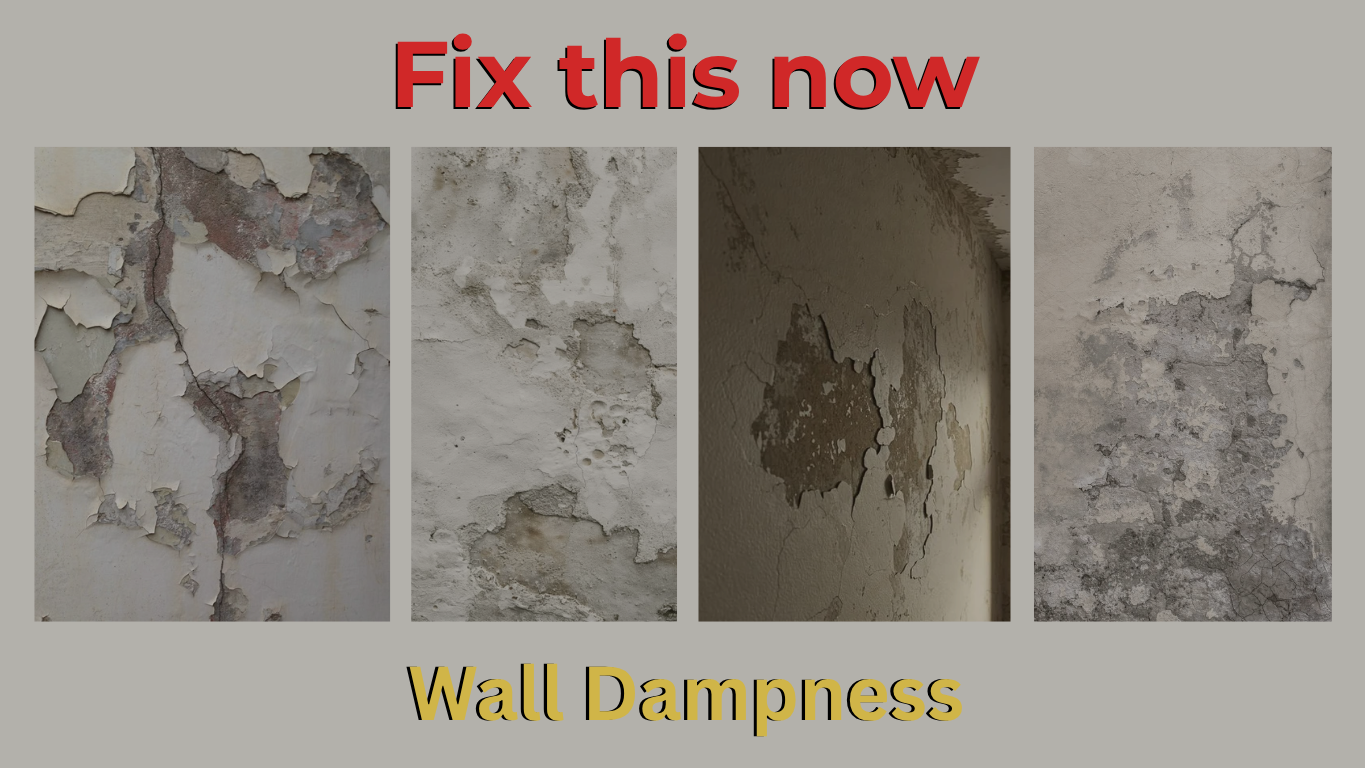
Wall dampness is one of those silent home destroyers that don’t knock before entering. It starts small — a patch, a bubble, or a musty smell — and before you know it, the paint starts peeling, plaster weakens, and your room begins to smell like a storeroom.
But here’s the good news — dampness is 90% preventable if you understand what causes it and how to act early.
Let’s break it down from the ground up — literally.
🔍 1. Types of Wall Dampness
Each type of dampness has a unique cause and pattern. Knowing which one you’re facing helps in applying the right fix.
a. Rising Dampness
Moisture rises upward from the ground through the wall, just like a sponge sucking water.
Where it appears: Ground floor walls or areas near the plinth.
Signs: White salt marks, peeling paint, damp skirting areas.
Main reason: No or damaged Damp Proof Course (DPC).
b. Penetrating Dampness
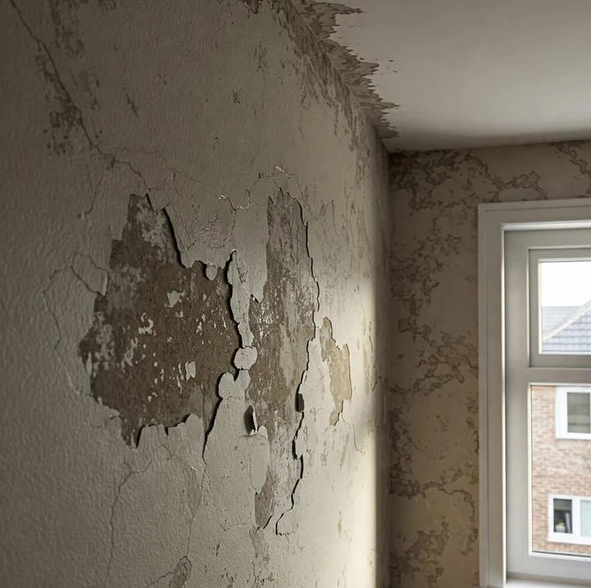
This occurs when rainwater or external moisture seeps through cracks, roof joints, or window gaps.
Where it appears: Exterior walls, ceilings, and near window corners.
Signs: Wet patches after rain, mold, and plaster bubbles.
Main reason: Unsealed joints, poor wall coatings, or roof leaks.
c. Condensation Dampness
Here, moisture forms from inside, when warm indoor air hits a cold wall surface.
Where it appears: Bathrooms, kitchens, and poorly ventilated rooms.
Signs: Water droplets, black mold, and musty odor.
Main reason: Poor air circulation and high humidity.
2. Why Wall Dampness Occurs (Hidden Causes Nobody Mentions)
a. Wrong Plaster Mix Ratio
If the cement-sand ratio isn’t correct, micro-cracks form and act as moisture pathways.
b. Absence of DPC
In many low-cost or old constructions, the damp-proof course is either missing or poorly installed. Once moisture finds this weakness, it never stops rising.
c. Poor Site Drainage
Water stagnation near the plinth lets moisture seep into the foundation, especially if the ground slope is incorrect.
d. Lack of Ventilation
Rooms without proper airflow trap humidity, increasing the risk of condensation dampness.
e. Hidden Plumbing Leaks
Leaking concealed pipes behind walls can create invisible dampness patches that keep returning.
3. How to Prevent Wall Dampness Before It Starts
A. Prevention During Construction
- Apply a Strong Damp-Proof Course (DPC):
- Use a 2-layer DPC with 1:1.5 cement-sand mix + waterproofing compound.
- Alternatively, use bitumen or chemical DPCs for long-term protection.
- Use Integral Waterproofing Compounds:
- Mix polymer-based waterproofers directly into plaster and concrete.
- Maintain Proper Slope & Drainage:
- Ensure rainwater flows away from the building base.
- Use perimeter drains and proper rainwater pipes.
- Control Brick Soaking:
- Over-soaked or dry bricks can cause uneven moisture absorption. Soak bricks uniformly for 5–10 minutes.
- Cure Smartly:
- Instead of flooding the walls, use sprinkling or wet cloth curing to prevent salt deposits and cracks.
B. Prevention After Construction
- Seal Cracks Annually:
- Use acrylic or cement-based crack fillers before the monsoon.
- Ventilate Naturally:
- Encourage cross ventilation and install exhaust fans in humid areas.
- Use Breathable Paints:
- Go for silicon-based exterior paints that let the wall “breathe.”
- Test Plumbing Regularly:
- Do a water pressure test every 2 years to catch leaks early.
- Maintain External Drains:
- Keep the slope clean and avoid stagnant water near foundations.
4. Modern Processes to Control Wall Dampness
a. Crystalline Waterproofing
Advanced chemical compounds that react with cement to form crystals that permanently block water pores.
Best for: Basements, water tanks, terraces.
b. Injection Grouting
A professional method where waterproof chemicals are injected into damp walls to form a new invisible DPC.
Best for: Existing houses facing rising dampness.
c. Breathable Anti-Damp Coatings
Unlike typical waterproof paints, these coatings let trapped moisture escape, preventing bubbling.
d. Traditional Lime Plaster Revival
Old-school lime plaster is naturally breathable and self-healing — a great option for sustainable homes.
5. FAQs About Wall Dampness
Q1. Can painting fix damp walls?
No. Paint hides the dampness temporarily; the source of moisture must be fixed first.
Q2. How long does waterproofing last?
A well-done DPC or waterproof coating lasts around 20–25 years with proper maintenance.
Q3. Can old houses be protected from dampness?
Yes. Through grouting, sealing, improved ventilation, and exterior coating.
Q4. What’s the main difference between waterproofing and damp-proofing?
Waterproofing blocks water (used for roofs or tanks), while damp-proofing controls moisture movement through walls.
Q5. Is dampness harmful to health?
Yes. Prolonged exposure to damp walls can cause mold allergies and respiratory issues.
Final Thoughts
Wall dampness doesn’t start overnight — it’s a long, silent process caused by small oversights.
Whether you’re constructing a new home or maintaining an old one, prevention is far cheaper and smarter than repair.
A well-built, well-ventilated, and well-drained house will never fear damp walls.
Because dry walls aren’t just about beauty — they’re about health, strength, and comfort.