Building a house is one of the biggest dreams for many families. It’s a mix of excitement, emotion, and a lifetime investment. Most people begin with one simple goal — to make the best use of their land and build their dream home.
But in that excitement, one crucial step often gets ignored — planning the house layout properly.
A well-planned home layout is the foundation of comfort, ventilation, and functionality. Even small mistakes made during this stage can lead to long-term problems — from poor ventilation and awkward furniture placement to unnecessary expenses.
Let’s look at the five most common mistakes people make while planning their house layout and how you can avoid them.
1. Ignoring Setbacks and Ventilation
One of the most frequent home design mistakes is neglecting proper setbacks.
Many homeowners think, “Let’s use every inch of space,” and build walls right up to the boundary lines. Initially, it feels like you’re maximizing your plot area. But later, you face major problems — rooms without natural light, poor air circulation, and increased heat inside the house.
Lack of setbacks also causes trouble during maintenance. For example, if a wall needs repair or waterproofing later, you might need access from your neighbor’s property. And if they refuse, you’ll have no way to fix the issue.
👉 Always leave sufficient space on all sides of your home. It ensures proper cross-ventilation, privacy, and easy maintenance — essential for long-term comfort.
2. Compromising on Planning to Save Cost
Yes, saving money is important — but not at the cost of your home’s functionality.
Some people approach local masons or low-cost draftsmen instead of qualified architects, thinking it will save money. Unfortunately, this often results in layouts that lack flow, proportion, and future flexibility.
A poorly planned house layout might lead to smaller rooms, poor ventilation, or awkward spaces that cannot be corrected later without huge costs.
It’s smarter to invest in professional planning at the start. A good architect or designer can help you optimize space, ensure proper natural light, and even reduce long-term construction costs through efficient design.
Think of it this way — a few extra rupees spent on planning can save lakhs during construction and maintenance.
3. Changing the Plan Midway (Not Sticking to the Final Plan)
Here’s a story that happens in almost every Indian home project:
A family finalizes their plan after weeks of discussions, and construction begins. But halfway through, relatives or neighbors give “suggestions” — “Shift the kitchen this side,” or “Add one more room upstairs.”
Small changes like these can completely disturb the structural balance, plumbing lines, and cost estimation. Every modification during construction increases expenses, delays, and confusion between workers.
That’s why it’s important to finalize the plan completely before laying the first brick.
Discuss every detail — from electrical points to bathroom placements — with your architect and family in advance. Once everyone agrees, lock it in and move forward confidently.
A clear plan leads to a smooth and cost-efficient construction journey.
4. Relying Only on the Engineer or Architect Without Sharing Your Needs
A good architect can design beautiful homes, but they can’t read your mind.
Many people simply share their plot size and say, “We want a 2BHK” or “Design a duplex.” Without sharing your lifestyle or specific requirements, the plan may end up technically correct but practically inconvenient.
Every family is different — your habits, routines, and preferences should reflect in your layout.
Before meeting your architect, take time to list your needs:
- How many people will live in the house?
- Do you prefer a closed or open kitchen?
- Do you need a pooja room or a guest bedroom?
- Are you planning for rental income in the future?
When you communicate clearly, your architect can design a layout that fits your lifestyle, not just your plot dimensions.
5. Neglecting Furniture Placement During Planning
This is one of the most overlooked house planning mistakes.
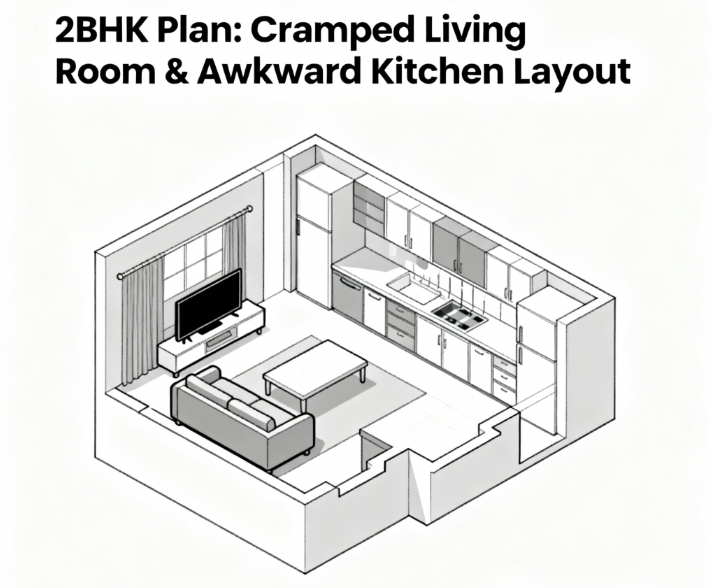
A plan might look perfect on paper, but once you place the furniture — problems appear. The sofa might block a pathway, the bed might cover a window, or the TV may end up in a corner where no one can view it comfortably.
The issue arises because most people plan rooms first and furniture later. But in reality, furniture defines how the space will function.
To avoid this, always prepare a furniture layout plan along with your main house plan. It helps you understand:
- Whether there’s enough walking space (at least 2.5–3 feet).
- Where switches, plug points, and lighting should go.
- How each room will actually be used daily.
This one simple step can make your home both functional and comfortable — without surprises after construction.
Final Thoughts
Your house layout decides how well your home performs for years to come.
By avoiding these five mistakes, you ensure a home that’s not only beautiful but also practical, airy, and efficient.
Here’s a quick recap:
✅ Leave proper setbacks for ventilation and maintenance.
✅ Don’t compromise on planning quality to save cost.
✅ Finalize your plan before construction begins.
✅ Share your personal requirements with your architect.
✅ Include a furniture layout to make your home functional.
A house built with thoughtful planning feels more peaceful, comfortable, and timeless.
So take your time — plan smart, build once, and enjoy your dream home for a lifetime.